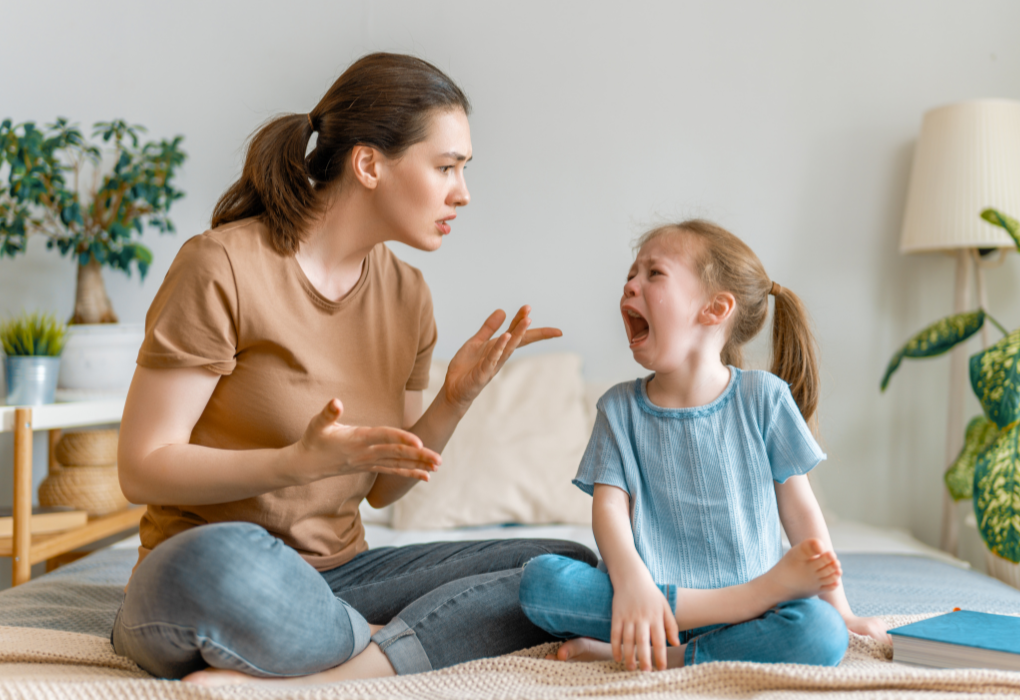
Gut check: Do you get glowing reports from your child’s teacher, hear them say “please” and “thank you” to Grandma, and watch them share nicely with their friends, only to see them fall apart into a complete and utter meltdown the moment they are alone with you? Yep, join the club.
These frustrating moments may have you thinking something like, “What is wrong with my kid? What is wrong with our relationship that they only do this with me?!” However, you may be relieved to know that there is actually a scientific reason why this happens… and don’t worry, it’s not a sign your child doesn’t respect you, has behavior problems, or that you’re doing anything “wrong.”
In fact, it is typical, appropriate, and dare I even say healthy for kids to hold it all together when they’re with other people, and only let out the rawest and messiest side of themselves with those they feel safest with.
To truly grasp why this is happening (and why it’s a sign of a strong connection), it’s helpful to understand the basics of attachment theory and the psychology of what is going on in our child’s brain and body.
What is attachment theory?
Attachment theory states that an infant is biologically hardwired to attach to their primary caregiver, typically a parent, in order to ensure their greatest chance of survival.
In psychology, we measure the quality of that attachment bond as either secure or insecure. When a child is securely attached, their primary caregiver helps them to feel, to quote Dr. Dan Siegel, “Safe, seen, soothed, and secure.”
A secure attachment bond is a predictor of many positive mental health outcomes including increased self-esteem, independence, lower reported instances of anxiety and depression, reduced stress response, better physical health, better achievement, and the list goes on and on!
But, what does attachment theory have to do with my child’s behavior problems?
When we look at this situation from an attachment lens we realize a child’s behavior does change when they are with us. When they save their tantrums, meltdowns, and attitude for us, it means they trust that we won’t stop loving them and, in fact, that we will help soothe them, help them to feel safe, and reestablish that sense of security.
Our presence is a trigger, but a healthy trigger. We are the conduit that allows our child to open up the release valve and let the steam out to reconstitute their nervous system. And while it’s tough to be on the receiving end of this, the alternative–our child bottling up all those big emotions–is certainly much worse.
None of this is volitional or intentional. Just like attachment–which is a biological and evolutionary response–our child losing their sh*t with us is an instinctual nervous system response. Not only do they have very little control over it, but they’re also probably not even aware they are doing it.
Is there anything I can do to get my child to behave better with me?
Just because this is normal doesn’t mean it’s easy for parents to deal with. And there are some strategies you can use to get through these messy moments together.
For starters, it helps to challenge your perception of what is happening. If you think your child is being a little devil, that automatically affects the way you respond. You may yell, try to ignore them, or send them into a timeout, unintentionally pouring gasoline on their fire, prolonging their dysregulation, and making this behavior likely to occur with more frequency and intensity in the future.
It can be far more effective and calming for you to try to take a moment in the face of this behavior and remind yourself:
This behavior is a sign that my child feels safe with me, but they are having trouble ____ (fill in the blank—inhibiting their impulse, regulating their emotions, etc.)
Then, notice if the way you feel and ultimately act changes. Do you go from feeling angry and wanting to scream to instead feeling compelled to lean in, to nurture them, and to help reconstitute their feeling of safety with compassion and empathy?
By understanding the basics of attachment theory and working to have a mindful awareness of the situation at hand, we can use our attachment bond to our advantage as a tool to help make our children feel seen, safe, and secure, which can move them out of this “bad” behavior faster and reduce it over time.