When babies start solids, parents often wonder which feeding method is best. Should you start with spoon feeding? Are pouches okay? Does it even matter?
Here’s the simple answer: both can have a place. However, starting with spoon feeding supports important developmental milestones that go far beyond nutrition.
Signs Your Baby Is Ready (Because Timing Is Everything)
Babies don’t come with calendars, but they do give clues. Many little ones start showing readiness for solids between 4–6 months, though your pediatrician should always give the official green light.
Here are a few signs your mini may be gearing up for their first bites:
- Sitting up with minimal support
- Showing strong interest in what you’re eating (suddenly your lunch is fascinating)
- Reaching for food or opening their mouth when food comes near
- Lots of tongue movement and exploration
Think of these signs as your baby saying, “Hey… I might be ready to join the dinner party.”
Why Spoon Feeding Supports Development
At Little Spoon, we love pouches for convenience—but we are big believers in starting with spoons first, especially during those early feeding months.
Those first messy spoonfuls may look adorable, but they also play a major role in helping babies learn how to eat, communicate and explore food.
Builds Motor Coordination
First and foremost, spoon feeding helps babies develop fine motor skills. When babies watch food travel from spoon to mouth, they begin learning hand-eye coordination and body awareness. Over time, these skills help them learn self-feeding, grasping and eventually using utensils independently.
Helps Babies Recognize Fullness
Additionally, spoon feeding slows down the eating process. Because of this slower pace, babies have more time to recognize hunger and fullness cues. When babies eat too quickly—such as when food is squeezed directly from a pouch—they may miss those internal signals that tell them they are satisfied.
Learning how to pause, swallow and respond to fullness helps establish healthy eating habits later in childhood.
Strengthens Oral Muscles for Speech Development
Another major benefit involves oral muscle development. Spoon feeding encourages babies to move food around their mouth using their tongue, lips and jaw. These movements help strengthen muscles that later support speech development and sound formation.
Supports Texture Progression and Chewing Skills
Just as importantly, spoon feeding allows babies to gradually transition from smooth purees to thicker textures and eventually to soft solids. This progression teaches babies how to chew safely and comfortably, which can reduce feeding anxiety later on.
Encourages Sensory Exploration and Mealtime Bonding
Finally, spoon feeding transforms mealtime into a sensory learning experience. Babies explore smells, colors, textures and flavors while also building connection through shared feeding moments. These early positive food experiences help children develop curiosity and confidence around eating.
How Babyblends Simplify Starting Solids
Starting solids can feel overwhelming for parents. Questions about textures, ingredient combinations and developmental readiness often lead to endless late-night internet searches.
That is exactly why we created Babyblends—to remove the guesswork and provide developmentally appropriate progression through the early feeding journey.
The Babyblends Stage System Explained
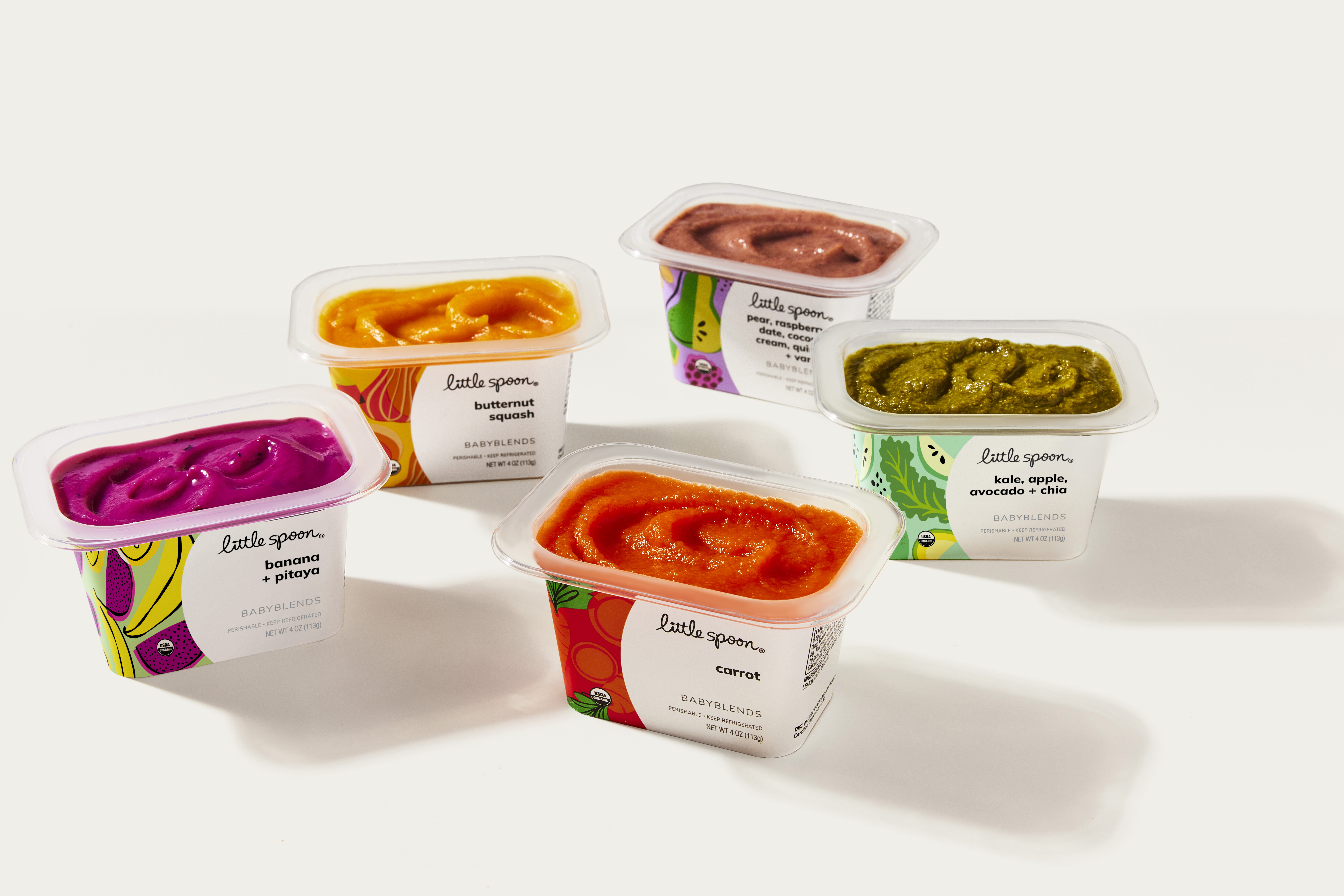
Instead of leaving parents to navigate feeding milestones alone, Babyblends follow a thoughtful five-stage progression that supports both nutritional and developmental needs.
Stage 1 (6+ months): Single Ingredient Introductions
Stage 1 focuses on smooth, single-ingredient purees. These blends help babies explore individual flavors while also supporting early allergen and ingredient introductions. The ultra-smooth texture makes swallowing easy while babies learn how to manage food in their mouths.
Stage 2 (6+ months): Gentle Two-Ingredient Combinations
Once babies become comfortable with individual foods, Stage 2 introduces simple two-ingredient blends. These combinations help expand flavor familiarity while maintaining easy-to-eat textures.
Stage 3 (7+ months): Flavor Expansion With Herbs and Spices
At Stage 3, babies begin exploring more complex flavor profiles. These blends include three ingredients and introduce mild herbs and spices that help expand palate development. Early flavor exposure may help encourage adventurous eating later in childhood.
Stage 4 (8+ months): Thicker Textures and Superfood Variety
Stage 4 blends increase ingredient diversity while introducing thicker textures. These recipes incorporate superfoods, vegetables, fruits and proteins that support nutritional variety and oral skill development.
Stage 5 (8+ months): Advanced Blends With Chunkier Textures
Finally, Stage 5 supports babies transitioning toward table foods. These blends include grains, legumes and chunkier textures that help babies practice chewing and prepare for more advanced eating stages.
When Pouches Make Sense
Of course, real life rarely happens in perfectly planned feeding routines. Busy mornings, travel days and disappearing spoons are all part of parenting reality.
That is where Babyblends Pouches come in. These fridge-fresh blends offer convenient, nutritionally balanced baby meals for babies 7 months and older, using Stage 3 through Stage 5 recipes.
With eight new recipes available, Babyblends Pouches provide organic, toxin-tested meals that support feeding progress even when families are on the go.
Babyblends Pouches vs Babyblends+: What’s the Difference?
Parents often wonder how Babyblends Pouches compare to Babyblends+ pouches. While both offer convenient feeding options, they serve different purposes.
Babyblends Pouches function as complete, balanced baby meals designed to support daily feeding routines.
Babyblends+ pouches, on the other hand, provide targeted nutritional support. These blends focus on functional ingredients that support brain development, digestive health and immune support. Think of them as nutrient boosters rather than full meals.
Together, these options allow parents to balance convenience, developmental feeding goals and targeted nutrition support.
A Feeding Approach Designed to Reduce Stress
No matter which Babyblend option families choose, our philosophy remains consistent. Feeding babies should feel supportive, flexible and stress-free—not overwhelming or confusing.
By combining developmental feeding guidance with clean, organic ingredients and rigorous safety testing, Babyblends help parents feel confident through every stage of starting solids.
Because at the end of the day, feeding your baby should not require guesswork. It should simply feel like nourishment, connection and confidence—spoonful by spoonful.