Can you believe it’s already time to start your little babe on solids? Oh, how the time flies. We’re guessing you are flooded with mixed emotions – shock, excitement, sadness (they’re getting so old!), confusion and more. Don’t worry, Little Spoon is here to help ease the transition from breastmilk and/or formula to solids a breeze. Here is everything you need to know to get started:
If your mini is sitting up independently, showing interest in what people around them are eating and are sticking their tongues out a lot, they are showing signs that they are ready to start solids! This typically happens when your little is between 4-6 months old and your ped will give you the green light to get started.
We suggest starting with simple, single-ingredient Little Spoon Babyblends or introducing whole soft foods like avocado or banana. Little Spoon has a full starting solids system with five eating stages, so that your babe can grow with the menu! Let’s break down the ages and stages for you:
- Stage 1 (6+ months) – Single Ingredient Blends such as Carrot or Mango, are very smooth purees to jumpstart your little’s starting solids journey.
- Stage 2 (6+ months) – Two Ingredient Blends such as Golden Beet + Broccoli or Purple Sweet Potato + Pear, are smooth for babies who are ready to try combos and new ingredients.
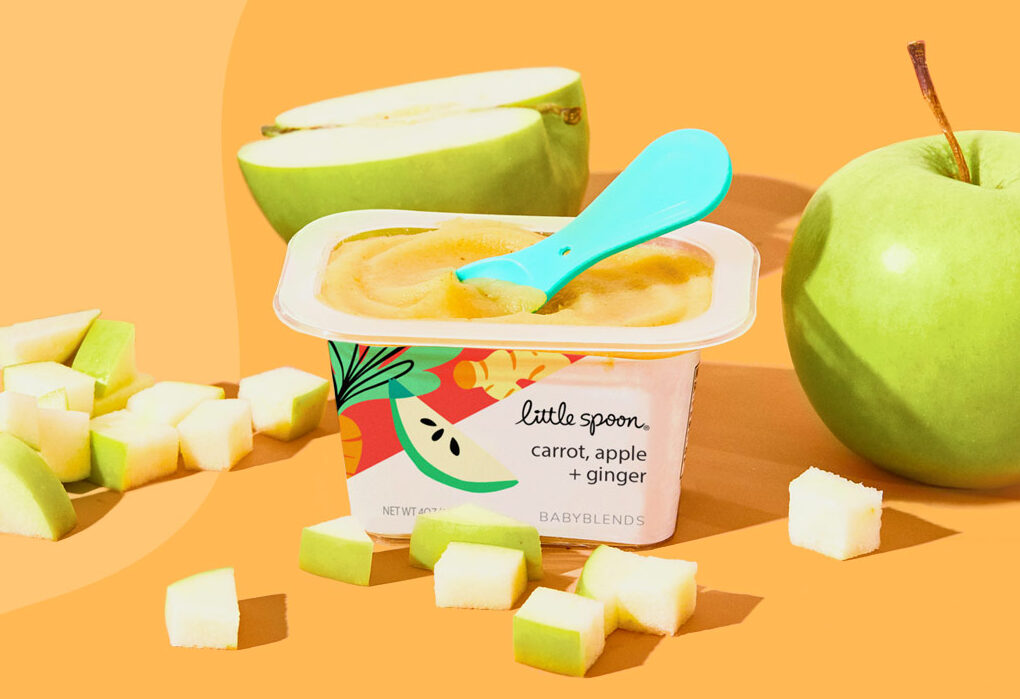
- Stage 3 (7+ months) – Three Ingredient Blends such as Pea Pear Mint or Carrot Apple Ginger, are combos that are smooth in texture and designed for palate expansion.
- Stage 4 (8+ months): – Four Ingredient Blends such as Turmeric Sweet Potato Bell Pepper Soup or Pitaya Coconut Bowl, are multi-ingredient blends with thicker textures and unique combinations.
- Stage 5 (8+ months) – Five or More Ingredient Blends such as Tuscan Quinoa and White Bean Soup or Apple Cinnamon Buckwheat Crumble, are unique combinations with thicker textures and chunkier ingredients.
So what happens if your kiddo rejects the food or gags? You try, try again. Believe it or not, it can take up to 15 repeat exposures for them to accept a new food—so don’t stress and keep trying. If you are still struggling to get your mini to try a new ingredient, try adding a familiar food or even breastmilk or formula so they respond to a familiar taste. Consistency is key, we promise!